
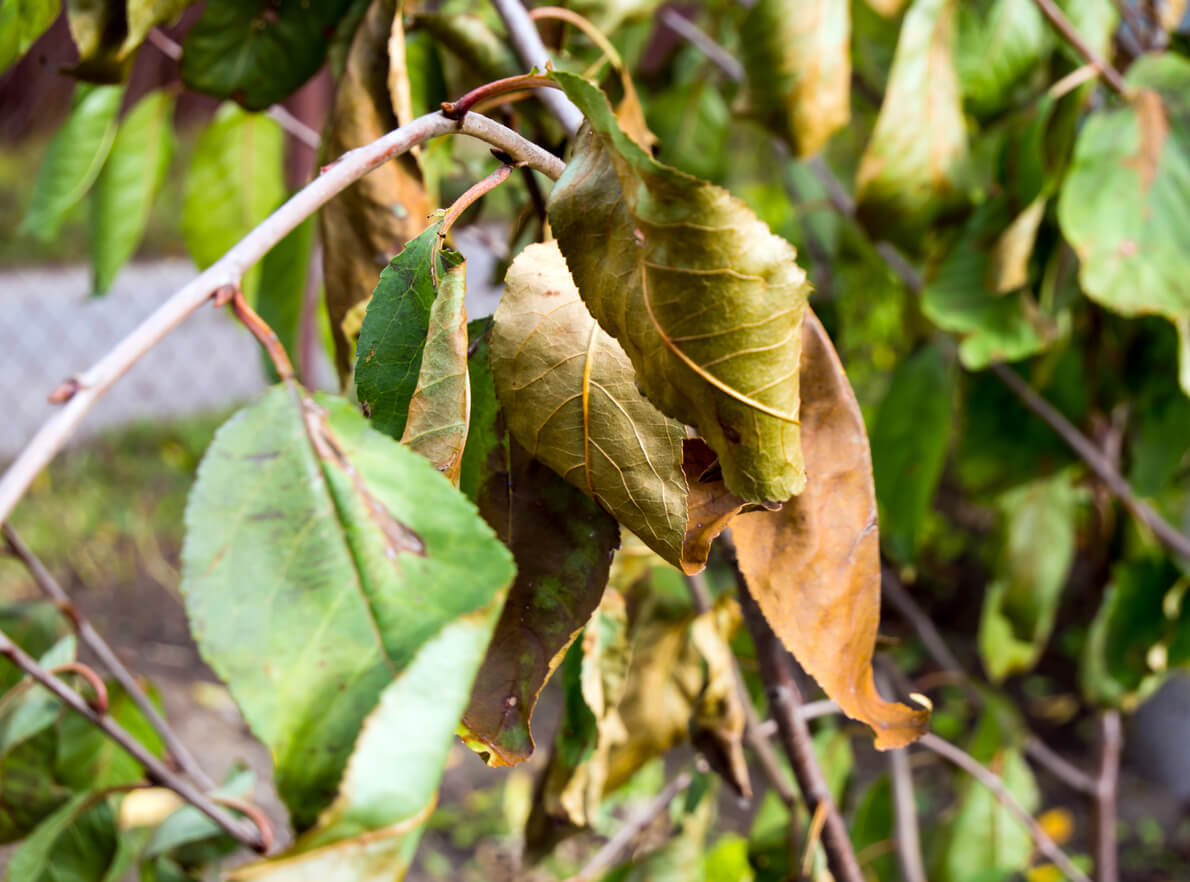
If your trees have drought stress, deep watering is critical to help them survive.
Drought stress is an increasing concern for our urban trees, including the trees in our yards. As our changing climate brings hotter weather and less rain, many urban trees are suffering.
Summer tends to be hot and dry in Seattle, but this year is much drier than normal. Seattle received less than half an inch of rain in June (the fifth driest June on record). In July we have only received 0.01 inches. This follows major droughts in 2024 and 2023. And temperatures in July have been hotter than the seasonal average.
Despite the seasonal lack of rain, we often assume that trees, especially mature trees, will be fine all summer without additional water. But this is less true as the climate changes. Now many trees need supplemental water to keep them alive and healthy.
Your trees may look fine right now, but the following years are when the damage will show. Take care of them now, and they will pay you back in beauty, shade, fruit and flowers.
Signs of drought stress
Take a look at your trees. If you see any of these signs, the tree is already under stress from lack of water. Watering now will help it survive. Prolonged drought stress can kill the tree.
- Wilting or drooping leaves. Leaves may wilt during the day and recover at night. During prolonged drought, leaves may not recover.
- Leaf scorch. Edges and tips of leaves will look browned or burned.
- Leaf drop. Trees may drop leaves prematurely to conserve water. In severe cases, trees can lose most or all of their leaves.
- Branch dieback. Dead branches, starting at the tips, are a sign of severe drought stresss.
- Thinning and yellowing leaves. Tree canopy will appear sparse, and leaves may turn yellow before dropping.
- Bark cracks. Prolonged drought can cause cracks in the bark, especially in thin-barked trees.
- Stunted growth. Reduced growth, smaller leaves and fewer leaves or fruit can also occur.
- Problems with insects and diseases. Trees that are stressed often emit distress signals that many damaging insects pick up on.
How to water your trees
Water the entire root zone area, and then let it partially dry out
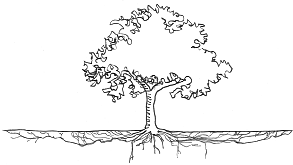
Most tree roots are within 12 inches of the surface. Roots extend well past the canopy drip line. Illustration: University of Minnesota Extension.
For most plants the root zone is at the outer tips of the leaves and beyond. It will not help the tree if you water close to the trunk. No root tips are there bringing in moisture for the plant.
Then allow the area to dry out partially. No roots want to be waterlogged all the time. The roots need oxygen. This happens when the soil is allowed to dry out some between waterings.
We suggest watering mature trees twice a month during the hot and dry season.
Water slowly and deeply for healthy plants
Water trees deeply to encourage deep roots that help them resist drought stress. The goal is to water less frequently but ensure the water reaches deep into the root zone.
A soaker hose is a good way to water trees. Wrap the hose in a spiral around the tree, starting outside the tree’s drip line. Turn the hose on, and let the water soak into the soil. You want the water to penetrate six to 10 inches into the soil; check it with a soil probe or screwdriver (see below). This can take a few hours, depending on how large the tree is and how dry the soil is.
Avoid light watering; this promotes shallow root systems that are susceptible to summer heat and drought stress. Your irrigation system probably doesn’t provide enough water to soak in deeply. If your soil is already dry, it may take a few waterings to “soften” up the top of the soil layer, allowing water to penetrate deeper into the soil profile.
Check soil moisture
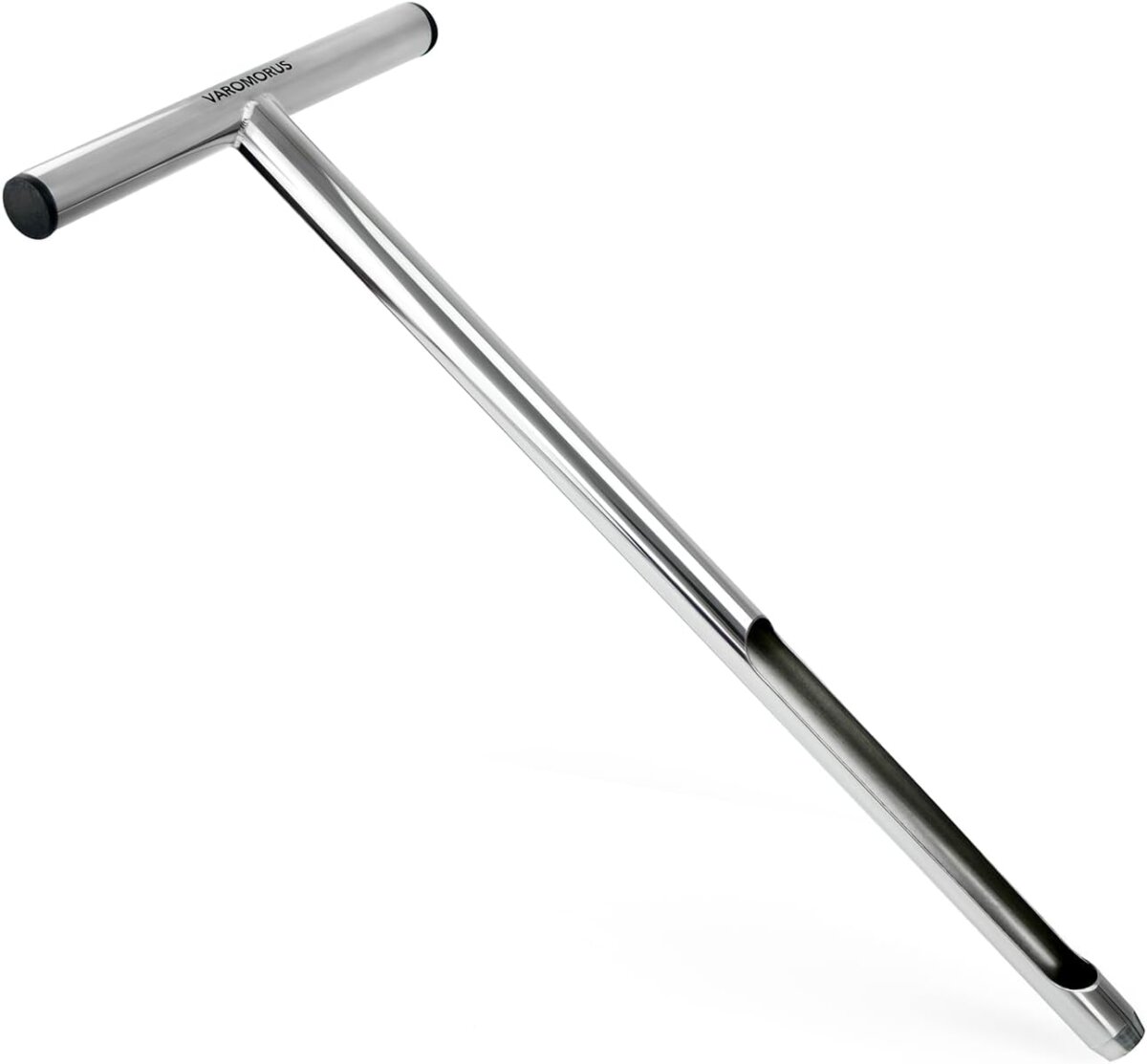
A soil probe will allow you to measure how deep the water has reached into the root zone.
Use a soil probe to measure whether you are reaching deep enough into the root zone to encourage your plants to grow deep roots. If you don’t have a soil probe, you can use a long screwdriver, at least eight inches long.
Just poke the probe or screwdriver into the soil. It will pass easily into moist soil, but be difficult to push into dry soil. If you can’t poke it in at least six inches, it’s time to water. This technique works best in clay and loam soils. Watch our short video on How to use a soil probe.
Water when it is cool
If you water in the heat of the day, most of the water will evaporate into the air before it has a chance to get to the soil. Mornings are the best time to water, the earlier the better. Evening is the second choice. Be aware that if you regularly water in the evening, it can promote some diseases.
Mulch is helpful
A thick layer of mulch (at least a few inches) will help your tree retain water. It also keeps suppresses weeds and keeps the soil cooler. To prevent rot, don’t pile mulch directly against the tree trunk; keep it at least a hand’s width away.
Ideally, the mulch should extend to the root line or beyond. If your tree is in your lawn, mulch is also helpful to prevent the lawn from competing with the tree for water, nutrients and root space. Replenish mulch as needed, at least annually. If you want to mulch now, water the tree thoroughly first so the mulch will help it retain water.
Newly planted trees need regular water
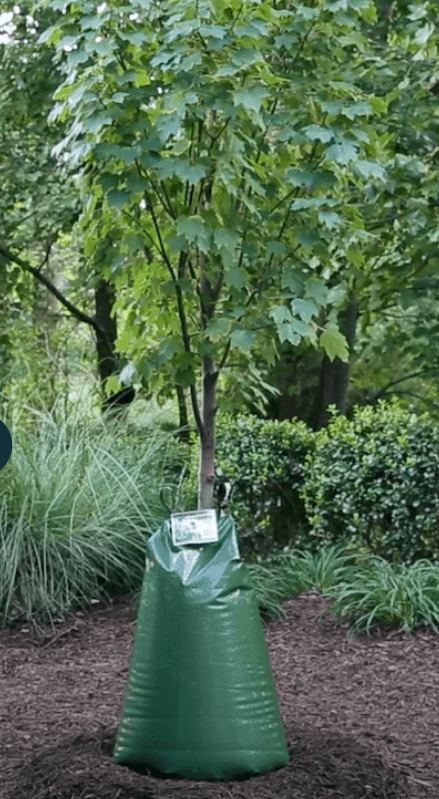
A watering bag is a convenient way to water young trees.
It is very important to water your newly planted trees for the first five years. This will help the trees establish in their new location, help them develop robust root systems and prevent issues like canopy dieback. We suggest watering them twice a week.
If you planted any trees this year, or within the last two years, a watering bag is a convenient way to water your trees slowly and deeply. Watch our video on Tree Gators for details.
Healthy trees will better resist drought
We offer natural tree and shrub care services, which include application of organic fertilizer along with deep root feeding, foliar feeding and soil drenches with organic products. If your tree is drought stressed, our services will help it recover and grow deep roots so it can better resist next year’s hot, dry summer. Contact us to find out more.

Nice article. Covered the topic thoroughly.
Thanks! We’re glad you liked it.