
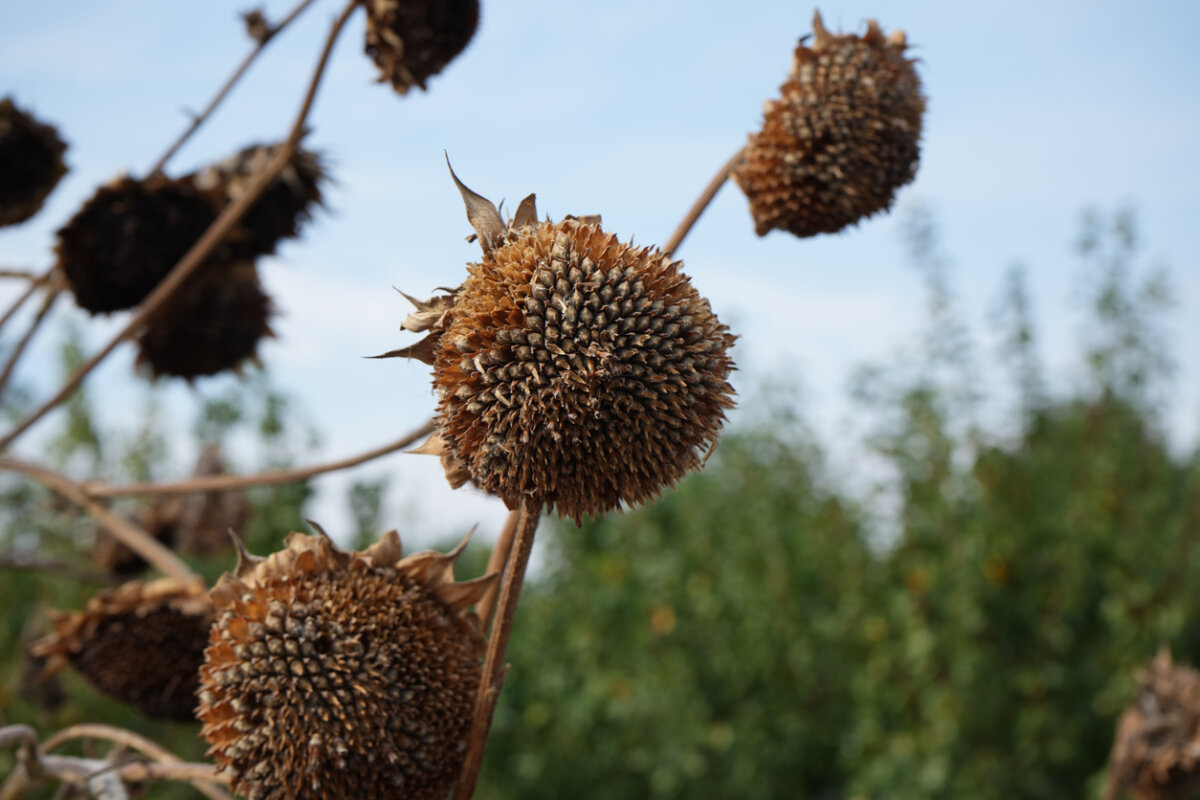
When you do your garden cleanup this fall, leave the seedheads of annuals and perennials to provide food for birds over the winter.
If you want to support the birds and tiny critters that make your garden healthy and vibrant, ease up on your fall garden cleanup routine. Here’s how to do it.
Leave the leaves
We recommend raking leaves off your lawn to keep the grass from thinning or developing disease, but don’t toss them out. Instead, spread them over your garden beds, where they make excellent mulch. Leave a space around the stems of trees and shrubs.
Birds may feast on critters, including insects and invertebrates, who make their homes in leaves. Birds eat many invertebrates, such the pupae of moth caterpillars. Bumble bees create nests in cavities underground. Ladybugs, lacewings and other predatory insects overwinter in an inactive state in sheltered spots like leaf litter or under tree barks.
Two or three inches of mulch will also reduce weed growth, protect plant roots from extreme temperatures and retain moisture in the soil. Mulch also helps reduce compaction and erosion from rain storms.
Leave seeds and stems
Resist the urge to deadhead your annuals and perennials this fall. Let seed heads stay in place. Many birds rely on those seeds for food in the colder months.
The hollow stems of perennials offer ideal nesting and overwintering spots for insects, which in turn become a vital food source for birds. The birds will help control pests during next year’s garden season.
About 30% of native bees, such as leafcutter and mason bees, are tunnel nesting. They use narrow tunnels or other tiny spaces in dead wood, hollow stems or brush piles to make their homes, according to the Xerces Society.
Wait on spring cleanup
When spring returns, hold off on your garden cleanup until temperatures consistently stay above 50 degrees F. Insects and invertebrates still need that shelter. To judge when to clean up, ask yourself: Is the grass growing enough to justify regular mowing? Would I plant tomatoes now? Are apples and pears finished blooming?
Let dead trees stand
“Unless your home is in danger, leave dead trees standing,” advises the National Garden Bureau. Dead trees, or snags, are crucial habitats for birds for nesting, storing food, hunting, rooting and resting. Many birds nest in cavities in dead trees, including woodpeckers (who often create or enlarge the cavities), chickadees, titmice, nuthatches, bluebirds, tree swallows, great crested flycatchers, wood ducks and American kestrels. As the snags slowly decay, they also nourish the soil and support countless microorganisms.
Build a brush pile
Adding a brush pile is one of the most effective ways to create wildlife habitat while saving money and helping the environment, notes the Xerces Society. Gather fallen branches, shrub prunings and other plant debris from your garden to form a brush pile. This structure provides cover for ground nesting bees, shelter for birds and small animals, and a rich food source for many invertebrates.
