
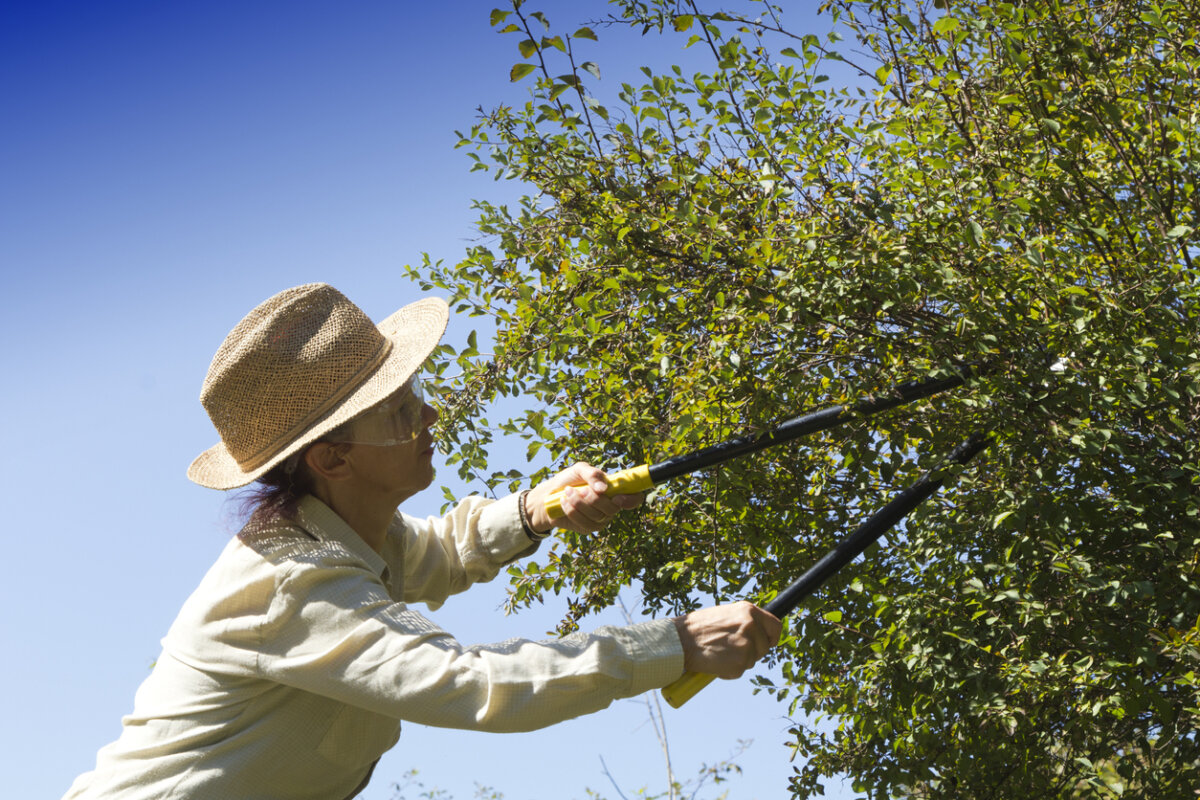
There are several good reasons for summer pruning of your trees and shrubs.
Now is a great time to start thinking about your summer pruning plans. Our team is currently scheduling tree and shrub pruning for the summer season.
While many people think pruning is a winter task, there are several excellent reasons to prune in summer. Here are six key benefits to consider.
1. Slow down growth
Pruning in summer helps manage the size and shape of trees and shrubs, particularly those that grow vigorously. By cutting back spring growth and reducing the total leaf surface, you limit how much food the plant produces and sends to its roots. This naturally slows its rate of growth. This strategy is especially useful for plants in confined spaces.
2. Restore shape and structure
Summer is an excellent time for restorative pruning. It allows you to correct structural issues from past over-pruning, poor cuts or storm damage. Proper pruning helps bring plants back to their natural form while preventing new problems from developing.
Be sure to remove any dead, damaged and diseased tree limbs, as well as branches that could stress the tree or pose a safety risk. This reduces the chance of weakened limbs falling during future storms.
3. Assess health and vigor
With plants in full leaf, it is easier to evaluate a plant’s overall health and vitality. You can clearly see which branches need to be removed; they might be defective, damaged or simply overgrown. Shortening long lengths of new growth also reduces the risk of storm damage next fall or winter.
4. Reduce diseases and pests
Proper summer pruning promotes better air circulation and sunlight penetration through the canopy. This helps trees and shrubs stay healthy and discourages fungal diseases. It is easier to do this when the plants are in leaf, so you can see exactly how much to take out.
Some trees, especially stone fruits like cherries and plums, are susceptible to diseases if pruned in winter or fall. Pruning these during the dry summer months reduces the risk of infection.
Summer pruning can help to control pests. As you prune, inspect for pests like aphids and mites, and dispose of any affected fruit or branches (do not compost them). This will help keep your trees healthy and your fruit clean and pest-free.
5. Remove aggressive shoots and redirect branches
Some trees and shrubs send up aggressive shoots or “suckers” that drain energy from the main plant. Prune these in summer to maintain balance and encourage healthy central growth. It’s also a good time to redirect or shorten branches that overreach into nearby plants or structures.
6. Encourage fruit trees
For fruit trees, summer pruning helps direct the tree’s energy from producing excess foliage to developing fruit. This can lead to larger fruit and better harvests.
On many fruit trees, fruit forms on short flowering spurs along the lower half of branches. While those don’t need pruning, cutting back vigorous spring growth encourages new productive wood to develop. Improving light penetration also helps young fruit trees establish strong, durable branches, setting them up for years of abundant harvests.
Caution: don’t overdo it
Summer pruning should generally be a light touch-up, not a major structural overhaul. Removing too much foliage can stress the plant, making it vulnerable to heat and sun damage. Major structural pruning is typically reserved for the dormant season.
Get help
- Learn the basic principles of pruning in our YouTube video, How to Prune in Summer: Japanese Laceleaf Maple.
- Get practical advice on how to prune many different varieties of trees and shrubs on Plant Amnesty’s YouTube page.
- Contact us to get on our schedule for expert pruning services.
