
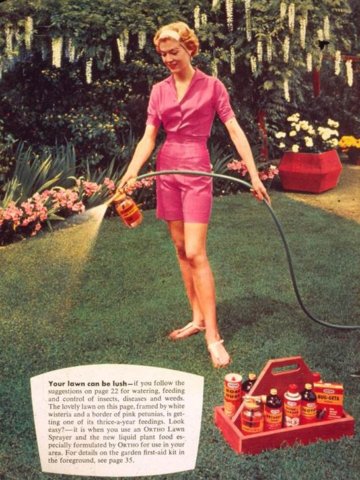
When we started In Harmony in 1994, we challenged the landscape industry’s “better living through chemistry” mindset.
When we started In Harmony in 1994, a loaf of white bread cost about 75 cents, and a gallon of gas averaged $1.11. Over the past three decades, much more than prices have changed—landscaping itself has transformed. As we celebrate our 30th anniversary, we’re reflecting on how our industry and our own practices have evolved.
A new approach to pesticides
In 1994 the landscape industry largely relied on routine applications of pesticides and chemical fertilizers—a “better living through chemistry” mindset. But we chose a different path. From the outset, we have focused on creating healthy landscapes. By nurturing plant health, we believed landscapes could thrive without depending on chemicals. This approach not only protects the health of our staff and clients, it also helps keep the soil, water and air clean.
Initially, many believed our approach wouldn’t work. But we persevered. Our early work was recognized with a Five-Star EnviroStars award, a Washington Governor’s Award for Achievement in Pollution Prevention and an Environmental Excellence Award from the Washington State Nursery and Landscape Association.
Today, our clients report that their landscapes are green and healthy, and they enjoy seeing birds, bees and butterflies. We continue to learn and adapt, refining our product choices as we understand more about their effectiveness and environmental impact. Our designers continue to select plants that will thrive without depending on pesticides.
While we still offer targeted pesticide treatments, our priority is educating our clients on strategies to reduce or eliminate pesticide use. For example, our Bee Friendly Lawn campaign, launched two years ago, teaches people how to maintain healthy lawns to support native bees. We emphasize that proper watering and mowing practices are important to keep the lawn healthy. We will not use weed and moss killer on lawns that are not maintained properly.
Homeowners are increasingly seeking more natural approaches for their landscapes. According to Market Research Intellect, the top trends in home garden pesticides are eco-friendly and organic products, integrated pest management (IPM) solutions, DIY pest control products and greater consumer education.
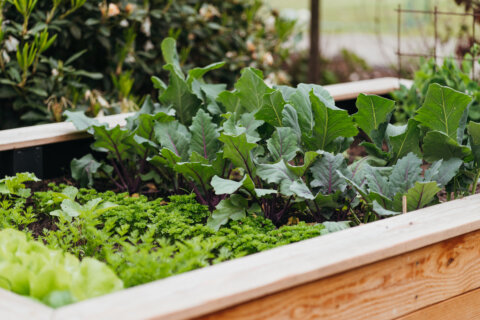
Now, in 2025, more homeowners request eco-friendly landscapes, organic vegetable gardens and plants to attract birds and bees.
The demand for organic food has also grown, with U.S. sales more than doubling from 1994 to 2014. The organic food market has grown about 7.7% annually since 2013. In 2024 sales of organic food reached about $71.6 billion. In recent years we have designed and installed more vegetable gardens for people who would like to grow their own organic food. And we have incorporated edibles, such as berry bushes and fruit trees, into the landscape.
Soil health: a living, dynamic ecosystem
When In Harmony began, horticulture education and standard industry practice centered on soil chemistry. Gardeners and landscapers were taught that soil was merely a static medium for plant growth, and they should feed plants by adding nitrogen, phosophorus and potassium (N-P-K) to the soil.
We now know that soil is far more than just chemistry. Thanks to the pioneering work of Dr. Elaine Ingham, widely recognized as the world’s foremost soil biologist, the industry’s mindset began to shift in the 1990s. Dr. Ingham taught us that soil is a living, dynamic ecosystem. Fungi, bacteria, protozoa, arthropods and nematodes fit together into a complex soil food web. Billions of soil microorganisms play vital roles in maintaining the health of soil and plants. Her approach has successfully restored soils on six continents.
Inspired by Dr. Ingham, we began brewing and applying compost tea to introduce and replenish beneficial microorganisms. We also use organic mulch, beneficial bacteria and fungi, and other natural products, to build soil health. And we amend the soil of new landscapes as part of the installation process to help plants get off to a good start.
Today, many people recognize that healthy soil leads to healthier plants that are less prone to pests and diseases. And there’s a greater appreciation for the environmental benefits of healthy soil, such as improved water filtration, reduced erosion and carbon sequestration.
Climate change: new challenges and solutions
In 1994 few were discussing climate change. Now, it’s hard to avoid talking about it, as expanding drought, extreme weather events, rising sea levels and other impacts are increasingly apparent. Here in the Northwest, we face hotter, drier summers and wetter, stormier winters.
We’re increasingly concerned about the long-term impacts of climate change on trees and other plants. Some years, our clients’ landscapes have shown signs of drought stress as early as May. Our educational efforts now emphasize smart watering to help plants stay healthy.
More extreme winter weather events can cause soil compaction and erosion, especially if the soil is not protected with a thick layer of mulch. Overly wet weather can also lead to fungal diseases, while high winds that often accompany rainstorms may break or tear branches and stems.
Climate change has brought invasions of pests, diseases and unwanted plants. Warmer winters might allow them to survive when colder temperatures would normally slow their spread. And water-stressed plants are more vulnerable to damaging insects. We stay informed through WSU Extension and other research sources, and closely monitor our clients’ landscapes.
Pollinators suffer with a changing climate. Rising temperatures cause flowers to bloom earlier, which may be out of sync with the schedules of bees and other pollinators that rely on them for nectar. More than 70 species of pollinators are listed as endangered or threatened.
Our designers pay attention to the changing climate when choosing and placing plants for new landscapes. For instance, we support pollinators by selecting plants that will bloom at different times during the growing season. And we position cool-weather plants in shaded areas to protect them from too much sun.
As the climate has warmed, we have designed and installed more outdoor rooms so people can entertain, relax and enjoy nature in their own landscapes. The Covid pandemic also brought an increase in requests for outdoor living spaces.
What you can do: climate-smart landscaping
- Plant more trees: Trees cool your house and reduce urban heat effects.
- Water wisely: Learn about the water needs of your plants and adjust your watering practices accordingly.
- Mulch regularly: Apply a deep layer of mulch every year to conserve water, protect soil and promote plant health.
- Choose resilient plants: Select species suited to hotter, drier summers, and site them to reduce the potential for winter damage.
- Prune for health: Regular pruning keeps trees and shrubs resilient against extreme weather.
- Support pollinators: Plant a variety of flowers that bloom at different times, so pollinators can find food throughout the season.
- Install a rain garden: Rain gardens help slow down intense winter rain, keeping our streams and lakes clean.
As we look ahead, we remain committed to sustainable, healthy landscapes—for our clients, our community and our planet. Contact us to find out more about our approach and services.

Such a great company! I think it was Ladd himself who came to our door looking for new customers in 94 or 95. We’ve been happy customers ever since, at two different homes. Congratulations on 30 years in business
Such a great company! It was Ladd himself who came to our door seeking new customers in ‘94 or ‘95. We’ve had great lawn service ever since, at two different homes. Congrats on your 30 years of smart and ecological landscape care!
Thanks so much! We are happy to have had you as a client for all these years. We appreciate your trust in our services.