
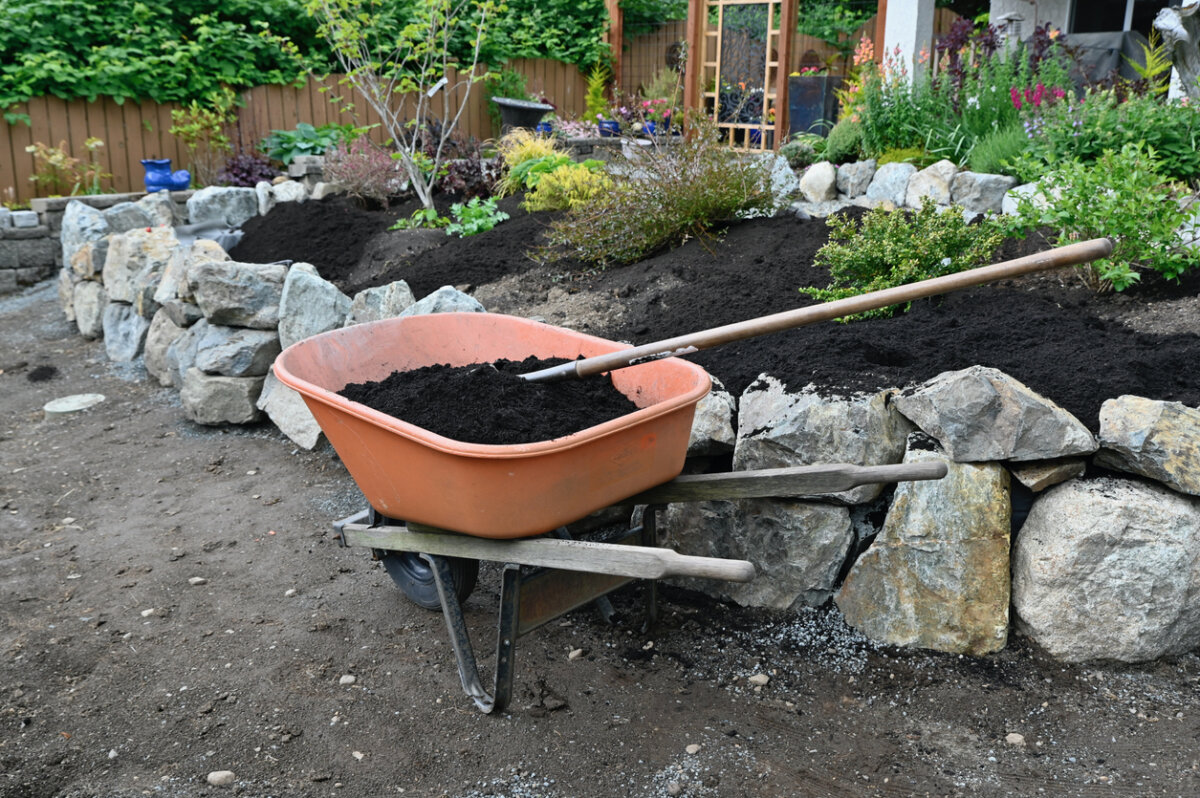
Spread mulch in your garden beds to reduce plants’ water needs and help keep your plants healthy. This and other spring garden tasks will help your landscape thrive even if this summer is again dry.
Drought conditions in western Washington are becoming more frequent and more intense. In 2025 the state had a third consecutive year of drought emergency, marked by a severe drought that lasted several months. Six of the past 10 years have been abnormally dry. This winter brought a severe “snow drought,” where rain has fallen instead of snow in the mountains, raising concerns for summer water supplies.
Now is the time to do several spring garden tasks to prepare your landscape for another likely dry summer. Take these steps to help your trees, shrubs, plants and lawn thrive despite limited water.
Add mulch
Early spring is an excellent time to spread mulch in your landscape beds. A thick layer of organic mulch around trees, shrubs and garden beds keeps roots cool, reducing plants’ water needs. It also helps keep soil from drying out, reducing the potential for drought stress.
Mulch has many other benefits: it reduces weed growth, supports beneficial soil life, helps keeps plant healthy, helps prevent the spread of soil-borne diseases and protects plant roots from extreme winter weather. Learn more in our blog post, How to use mulch in your yard.
Contact us if you’d like a quote for mulch application. We still have openings in our spring schedule.
Care for your irrigation system
Spring is the right time to inspect, adjust and maintain your system. A little attention now can save you lots of water (and money) during the hot and dry summer. Here are steps to take:
- Check for leaks
- Inspect and maintain sprinkler heads
- Flush the system once a year
- Monitor water pressure
- Consider a professional inspection
- Adjust your sprinkler schedule to match seasonal plant needs
- Upgrade to a smart irrigation system
Read more in our blog post, It’s time to care for your irrigation system.
Choose drought-tolerant plants
Take a moment to think about how your landscape handled last summer’s weather. Did some plants require frequent watering or struggle in dry conditions? If so, consider replacing them with drought-tolerant or native species that thrive with less irrigation.
Explore the drought-tolerant plant lists from Great Plant Picks, or talk to your local nursery for personalized advice. You can also find resources in our blog post, Choose plants for hotter, drier summers.
We can help you design a resilient, low-water landscape that fits your yard and the changing climate. Browse our portfolio and contact us to get started.
Raise your mower blade
Lawns stay healthier and handle heat better when mowed higher. We think three inches is the perfect height. Longer grass blades will shade the roots. The lawn will need less water, and it will develop and maintain a deep, healthy root system and excellent color. Taller grass also discourages weeds and supports strong photosynthesis. Read our blog post, Mowing tips for a healthy lawn.
Mulch mow
Mulch mowing adds organic matter to the soil. As grass blades break down, they add nitrogen, cutting fertilizer needs by as much as 25 percent. Mulch mowing can also reduce your total mowing, bagging and disposal time by up to 40 percent.
Aerate and overseed your lawn
A resilient lawn starts with healthy soil and proper care early in the season. Spring is a great time to aerate your lawn. Aeration reduces soil compaction and allows air and water to reach the root zone. You should follow aeration with overseeding to fill in thin spots.
Our natural lawn care program will enhance lawn health. We offer aeration and overseeding, fertilization, lime application and other services to build healthy lawns. If you’re not a client and would like a greener, healthier lawn, contact us for a free estimate.
