
Celebrate Pollinator Week! This year the emphasis is on how to help caterpillars that grow into butterflies and moths.
Pollinator Week runs from June 22 to 28. While bees usually get the spotlight, this year the Pollinator Partnership is highlighting a different group: caterpillars. Caterpillars may not pollinate plants themselves, but they grow into butterflies and moths—important pollinators that support healthy ecosystems. Their populations are in decline, mainly due to habitat loss. Butterflies, moths and caterpillars are also important food sources for other pollinators, such as birds.
How can you help caterpillars, butterflies and moths?
Plant native trees and shrubs
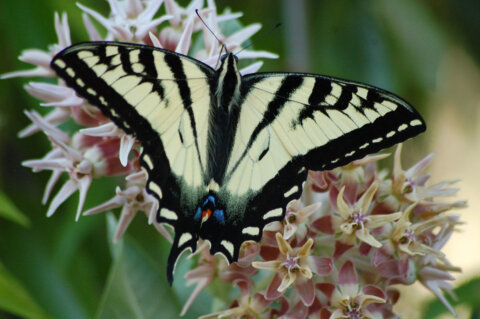
Help swallowtail butterflies by providing food and habitat for their caterpillars. Photo by US Fish and Wildlife Service.
There are about 149 species of butterflies and 1200 moth species in the Pacific Northwest. Washington has three large and spectacular tiger swallowtail butterfly species: pale swallowtail, western tiger swallowtail and two-tailed tiger swallowtail. They depend on native plants such as chokecherry, ceanothus, oceanspray, serviceberry, willows and maples as caterpillar host plants. Here are more caterpillar host plants for butterflies and moths.
The increased use of these native plants in landscaping and gardening has helped these butterflies expand into urban areas. During some recent summers people have found large numbers of swallowtails in Seattle. Read more about swallowtail butterflies.
Create soft landings
Most butterfly and moth caterpillars rely on native trees for food, and many species can feed on only one or a few specific host plants. After feeding, caterpillars drop to the ground to pupate in leaf litter or soil beneath their host tree. Leaving this area undisturbed creates a “soft landing.”
Soft landings are layered plantings of native species beneath native trees. These areas provide critical shelter and habitat for multiple life stages stages of moths, butterflies and other beneficial insects such as bumble bees, lacewings and beetles. In addition to plants, soft landings also include leaf litter, duff and plant debris. You can help insects in these habitats by decreasing raking and mowing. Less mowing helps prevent soil compaction and protects insects living in soil or underground.
Add nectar-rich native flowers
Plant native nectar-rich flowers that bloom from spring to fall to provide a continuous food source for both caterpillars and adult pollinators. Here is a list of native plants for caterpillars and butterflies in the Pacific Northwest, along with more information about attracting butterflies.
