
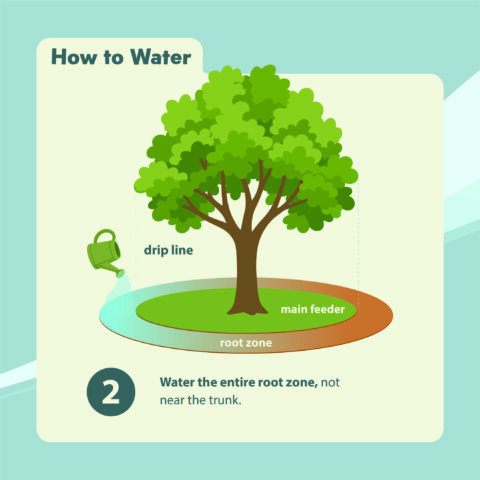
Most feeder roots are located at or beyond the drip line, the outer edge of the tree’s canopy. Concentrate your watering here.
Many trees are suffering as our summers get hotter and drier. In recent years we have seen more signs of drought stress in our clients’ trees. By the time a tree shows visible stress, it may already have been declining for several years.
Signs of drought stress
Take a look at your trees. If you see any of these signs, the tree is already under stress from lack of water. Watering now will help it survive. Prolonged drought stress can kill the tree.
- Dull leaves: Leaves that look dull instead of glossy can be an early sign of drought stress.
- Wilting: Leaves may wilt during the hot day and recover in the cooler evening. During prolonged drought, leaves may not recover.
- Leaf curling or rolling: This often occurs with wilting and is a classic drought response.
- Yellowing or scorched foliage: Leaves may turn brown at the edges or curl inward. Green conifer needles may turn brown, yellow, bronze, red or purple. These changes may be especially apparent on the sunnier or windward side of the tree.
- Early leaf drop: Deciduous trees may begin dropping leaves well before fall to conserve water. In severe cases, trees can lose most or all of their leaves.
- Canopy thinning: Foliage may thin and twigs or branches may die back in the upper tree.
- Stunted growth: New shoots may be shorter, fewer or discolored.
- Bark cracks. Prolonged drought can cause cracks in the bark, especially in thin-barked trees.
- Problems with insects and diseases. Trees that are stressed often emit distress signals that many damaging insects pick up on.
How to water trees
We love trees for their beauty, structure, shade and environmental benefits. If you want to keep your trees healthy and protect your investment, we recommend watering all trees, including large, mature trees, occasionally during the summer.
Focus on the drip line
Most feeder roots are located at or beyond the drip line, the outer edge of the tree’s canopy. Concentrate your watering here.
Water slowly and deeply
Deep watering encourages roots to grow deeper, making trees more resilient to drought, disease and pests. Tree roots may extend six to 10 inches below the soil surface. Avoid light watering, which can lead to shallow root systems that are vulnerable to summer heat and drought stress.
We recommend soaker hoses or drip irrigation. These methods deliver water slowly over a longer period of time. Your irrigation system probably doesn’t provide enough water to soak deeply into the soil. Depending on the tree’s size and how dry the soil is, it may take several hours to fully soak the roots.
Check soil moisture
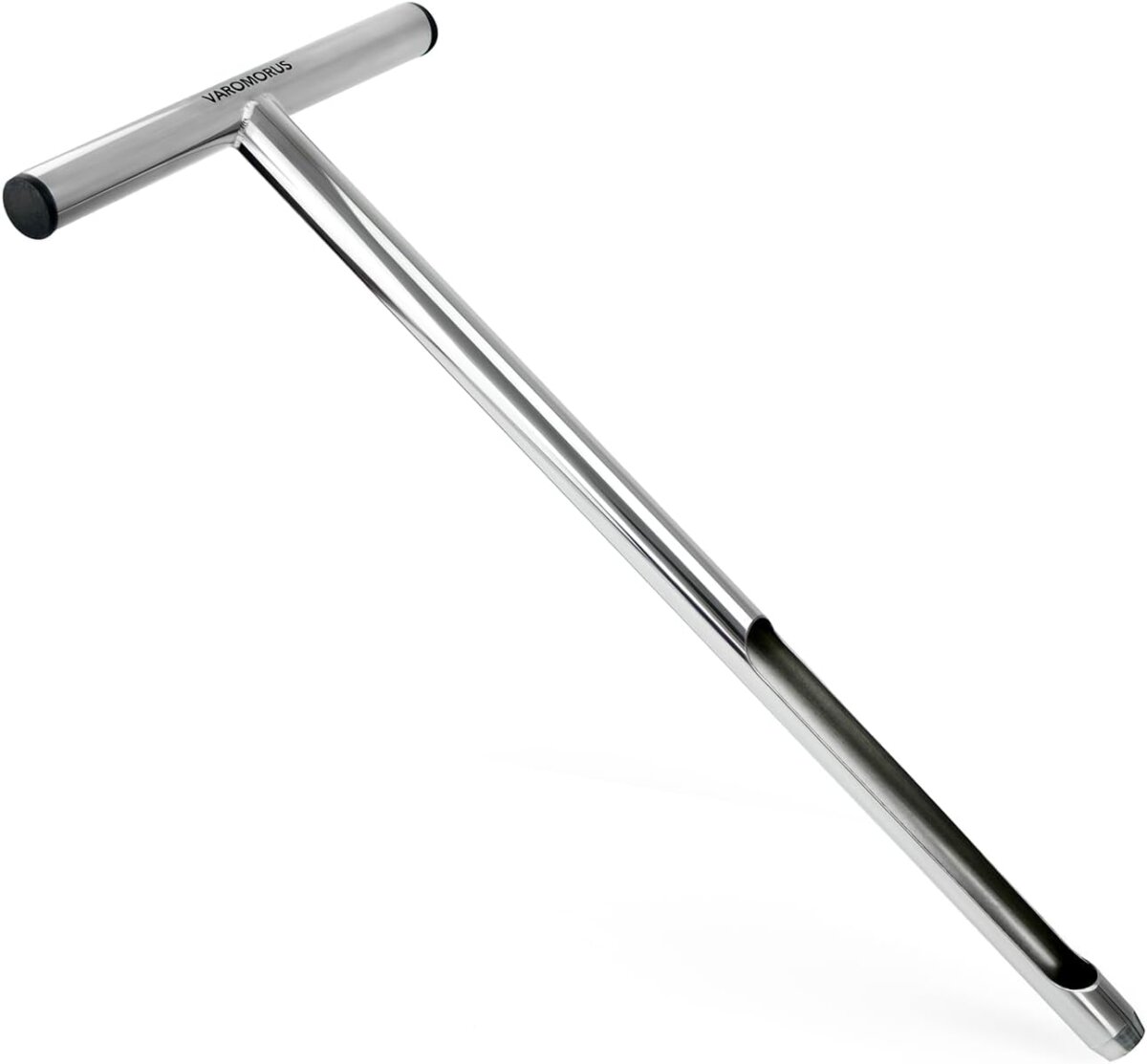
A soil probe will allow you to measure how deep the water has reached into the root zone.
You can use a soil probe to measure whether the water is reaching deep enough into the root zone to encourage your plants to grow deep roots. If you don’t have a soil probe, you can use a long screwdriver, at least eight inches long.
Just poke the probe or screwdriver into the soil. It will pass easily into moist soil, but be difficult to push into dry soil. If you can’t poke it in at least six inches, add more water. This technique works best in clay and loam soils. Watch our short video on How to use a soil probe.
Avoid overwatering
Plant roots need oxygen. If the soil stays waterlogged, tiny roots can suffocate. Allow the soil to partially dry out between watering sessions to give roots the air they need. Water mature trees once or twice a month during the dry and hot season, depending on your soil and the size of the tree.
Water when it is cool
If you water in the heat of the day, most of the water will evaporate into the air before it has a chance to get to the soil. Mornings are the best time to water, the earlier the better. Evening is the second choice. Be aware that if you regularly water in the evening, it can promote some diseases.
Don’t water the trunk
To help prevent root rot, never apply water directly to the trunk. Keep water at least 10 inches away. Remember, the most important place to water is the drip line.
Add mulch
Mulch helps to keep the soil from drying out and insulates the soil to keep it cool. It also controls weeds, feeds beneficial soil life and helps prevent the spread of soil-borne diseases. Use a thick layer of mulch, at least two to four inches of wood chips, bark, leaves or straw. Keep mulch several inches away from the tree trunk to prevent rot.
Ideally, the mulch should extend to the root line or beyond. If your tree is in your lawn, mulch is also helpful to prevent the lawn from competing with the tree for water, nutrients and root space. Replenish mulch as needed, at least annually. If you want to mulch now, water the tree thoroughly first so the mulch will help it retain water.
Newly planted trees need regular water
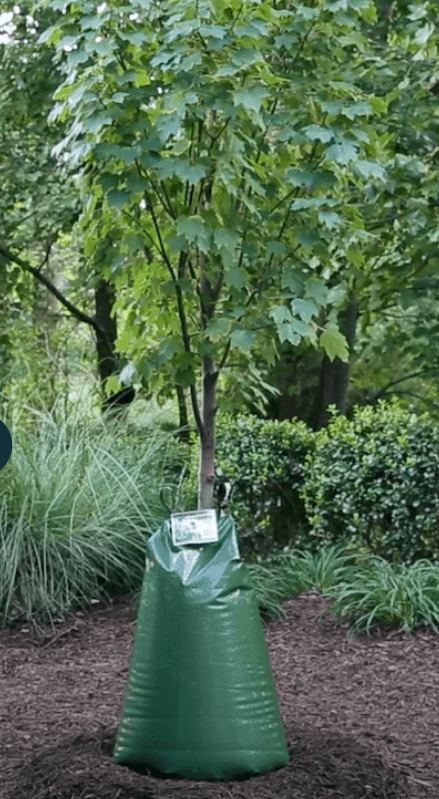
A watering bag is a convenient way to water young trees.
It is very important to water your newly planted trees for the first five years. This will help the trees establish in their new location, help them develop robust root systems and prevent issues like canopy dieback. We suggest watering them twice a week.
If you planted any trees this year, or within the last two years, a watering bag is a convenient way to water your trees slowly and deeply. Watch our video on Tree Gators for details.
Healthy trees will better resist drought
We offer natural tree and shrub care services, which include application of organic fertilizer along with deep root feeding, foliar feeding and soil drenches with organic products. If your tree is drought stressed, our services will help it recover and grow deep roots so it can better resist next year’s hot, dry summer. Contact us to find out more.
